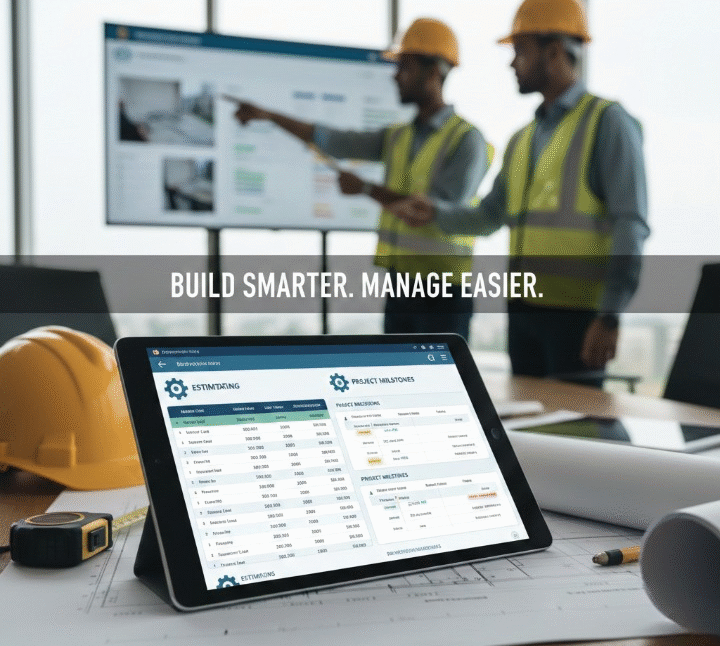
In today’s competitive construction industry, accuracy, efficiency, and timely delivery are essential for success. From small contractors to large construction firms, managing costs, schedules, resources, and teams can be challenging without the right digital tools. This is where construction estimating and project management software plays a vital role.
By combining cost estimation, scheduling, budgeting, collaboration, and reporting in one platform, modern construction software helps businesses reduce errors, improve productivity, and increase profitability. In this guide, we will explore how construction estimating and project management software works, its key benefits, essential features, and how to choose the best solution for your business.
What Is Construction Estimating and Project Management Software?
Construction estimating and project management software is a digital solution designed to help contractors, builders, engineers, and project managers plan, execute, and monitor construction projects efficiently.
It allows users to:
Create accurate cost estimates
Manage project timelines
Track labor and materials
Control budgets
Monitor progress in real time
Improve team communication
By integrating estimating tools with project management systems, construction companies can manage the entire project lifecycle from bidding to completion.
Why Construction Businesses Need Estimating and Project Management Software
Manual spreadsheets and paper-based systems are no longer reliable in today’s fast-paced construction environment. Mistakes in cost estimation, scheduling, or communication can lead to delays, financial losses, and client dissatisfaction.
Using professional construction management software helps businesses:
Minimize human errors
Improve cost accuracy
Save time on calculations and reporting
Enhance project visibility
Strengthen client trust
Increase overall efficiency
With digital tools, project managers can make informed decisions based on real-time data.
Key Features of Construction Estimating and Project Management Software
A reliable construction estimating and project management platform includes several powerful features that simplify daily operations.
1. Cost Estimation and Budgeting Tools
Accurate cost estimation is the foundation of every successful project. This software enables you to:
Create detailed material takeoffs
Calculate labor and equipment costs
Generate professional bids and proposals
Track expenses against budgets
Advanced estimating tools help reduce cost overruns and improve profit margins.
2. Project Scheduling and Planning
Effective scheduling ensures that projects stay on track. Most platforms offer:
Gantt charts
Task dependencies
Milestone tracking
Resource allocation
These tools help project managers organize tasks and avoid delays.
3. Real-Time Project Tracking
With real-time dashboards, you can monitor:
Work progress
Budget utilization
Site activities
Team performance
This visibility allows quick problem-solving and better project control.
4. Document and File Management
Construction projects generate large volumes of documents. Software solutions provide secure storage for:
Contracts
Blueprints
Drawings
Invoices
Change orders
Centralized document management reduces confusion and improves compliance.
5. Team Collaboration and Communication
Modern construction management software includes collaboration tools such as:
Instant messaging
File sharing
Task assignments
Notifications
These features keep all stakeholders connected, even on remote sites.
6. Reporting and Analytics
Advanced reporting tools help managers analyze project performance. You can generate reports on:
Cost variance
Productivity
Resource utilization
Timeline performance
Data-driven insights support smarter business decisions.
Benefits of Using Construction Estimating and Project Management Software
Implementing construction estimating and project management software offers multiple long-term advantages.
Improved Accuracy
Automated calculations reduce manual errors and improve bid accuracy.
Better Cost Control
Real-time budget tracking prevents overspending and supports financial planning.
Higher Productivity
Automation saves time and allows teams to focus on core construction activities.
Enhanced Transparency
Clients and stakeholders can access progress updates, improving trust and communication.
Scalability
Cloud-based software grows with your business, supporting multiple projects simultaneously.
How Construction Software Improves Project Efficiency
By integrating estimating, scheduling, and management tools into one system, construction software streamlines workflows.
For example:
Estimating data directly feeds into project budgets
Schedules are updated based on actual progress
Resource usage is optimized
Change orders are managed digitally
This integration reduces duplication of work and improves operational efficiency.
Cloud-Based vs On-Premise Construction Management Software
When choosing construction estimating and project management software, businesses must decide between cloud-based and on-premise solutions.
Cloud-Based Software
Advantages include:
Access from anywhere
Automatic updates
Lower upfront costs
Secure data backups
Cloud solutions are ideal for remote teams and growing companies.
On-Premise Software
Benefits include:
Full data control
Custom infrastructure
One-time licensing
However, on-premise systems require higher maintenance and IT support.
How to Choose the Best Construction Estimating and Project Management Software
Selecting the right software depends on your business needs, budget, and project scale. Consider the following factors:
1. Business Size and Project Volume
Small contractors may need simple tools, while large firms require enterprise-level solutions.
2. Feature Set
Ensure the software includes estimating, scheduling, reporting, and collaboration tools.
3. Ease of Use
User-friendly interfaces reduce training time and improve adoption.
4. Integration Capabilities
Choose software that integrates with accounting, CRM, and ERP systems.
5. Customer Support and Training
Reliable technical support ensures smooth operations and minimal downtime.
Popular Use Cases in the Construction Industry
Construction estimating and project management software is widely used across various sectors, including:
Residential construction
Commercial building projects
Infrastructure development
Renovation and remodeling
Industrial construction
Each sector benefits from improved cost control, scheduling accuracy, and performance tracking.
Future Trends in Construction Management Software
The construction industry is rapidly adopting advanced technologies. Future trends include:
Artificial Intelligence (AI)
AI-powered tools improve cost forecasting and risk management.
Building Information Modeling (BIM) Integration
BIM enhances planning accuracy and design collaboration.
Mobile Construction Apps
Mobile access enables site managers to update progress instantly.
Internet of Things (IoT)
IoT devices help track equipment usage and site conditions.
These innovations will further enhance construction estimating and project management systems.
Common Challenges and How Software Solves Them
Budget Overruns
Solved through real-time cost tracking and automated alerts.
Project Delays
Prevented with advanced scheduling and progress monitoring.
Poor Communication
Improved through centralized collaboration platforms.
Data Loss
Avoided with secure cloud storage and backups.
Conclusion: Transform Your Construction Business with Smart Software
Investing in construction estimating and project management software is no longer optional—it is essential for staying competitive in today’s construction industry. From accurate cost estimation to real-time project monitoring, the right software empowers businesses to deliver projects on time, within budget, and with high quality.
By adopting a reliable digital solution, construction companies can enhance productivity, improve client satisfaction, and achieve sustainable growth. Whether you are a small contractor or a large construction firm, modern construction management software is the key to building smarter, faster, and more profitably.